
Air Conditioning and Refrigeration
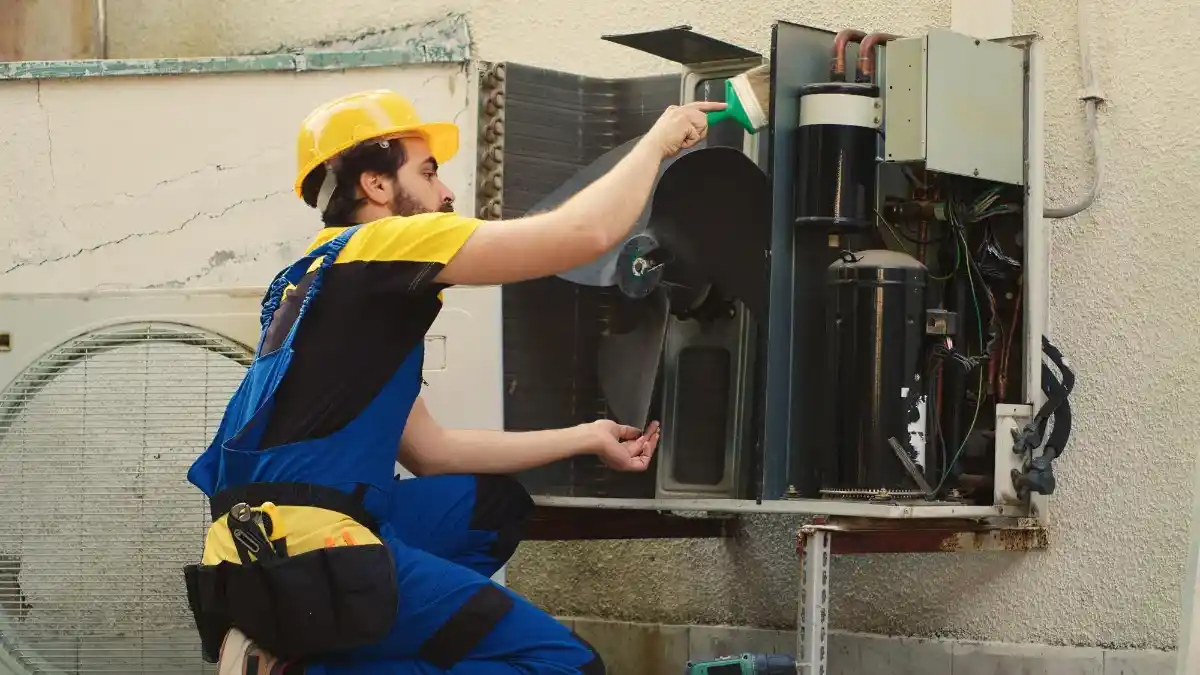
Train as an HVAC-R specialist with hands-on experience in modern systems.
Why Choose New York Academy
Graduates pursue careers in Air Conditioning and Refrigeration across residential, commercial, and industrial settings.
What You’ll Learn
✓
Hands-on shop training with industry-standard tools
✓
Small class sizes with individualized instruction
✓
Taught by working trade professionals
At New York Academy, we invite you to become part of an essential industry that defines the future of global climate control. Our Air Conditioning and Refrigeration Technician career prepares you with world-class technical competencies and an international perspective, integrating advanced theoretical knowledge with real practical experience through our innovative hybrid modality.
Opportunities in a Global Market
The technological revolution in HVAC-R systems and the urgent demand for energy-efficient solutions have transformed this profession into one of the most promising of the 21st century. This specialization strategically positions you in a constantly expanding job market, with unlimited opportunities in:
Residential sector: Smart homes and home automation systems
Commercial sector: Shopping centers, offices and corporate buildings
Industrial sector: Production plants, cold storage warehouses and specialized processes
International market: Global projects and technology transfer
Academic Excellence and Technological Innovation
Join a leading educational community that integrates international academic rigor, cutting-edge technology and innovative pedagogical methodologies. At New York Academy, you will develop not only technical expertise, but also leadership skills, critical thinking and environmental responsibility.
Your Professional Future Starts Here
Become part of the next generation of professionals who will lead the transition towards intelligent, ecological and highly efficient climate control systems. With our hybrid approach, you will access specialized laboratories, advanced simulators and a global network of professional opportunities.
Train specialized technicians in air conditioning and refrigeration systems with advanced technical competencies, international vision and sustainable commitment, capable of designing, installing, maintaining and optimizing high-efficiency HVAC-R systems in residential, commercial and industrial environments.
Fundamental Technical Competencies
Develop comprehensive mastery of the physical and thermodynamic principles that govern climate control systems, enabling students to:
Understand and apply laws of thermodynamics, heat transfer and fluid mechanics
Master compression and absorption refrigeration cycles
Interpret psychrometric diagrams and calculate heat loads
Handle ecological refrigerants and low carbon emission systems
Apply principles of electricity and electronics in control systems
Installation and Maintenance Skills
Train expert professionals in practical implementation of HVAC-R systems, developing capabilities to:
Install residential, commercial and industrial air conditioning systems
Execute commercial refrigeration equipment and cold storage chamber installations
Perform specialized welding on copper pipes and refrigeration connections
Implement mechanical ventilation and air purification systems
Establish preventive and corrective maintenance protocols
Diagnosis and Problem Solving
Train in advanced diagnostic and repair methodologies, enabling technicians to:
Use latest generation measurement and diagnostic instruments
Identify electrical, mechanical and refrigeration failures
Apply systematic and efficient troubleshooting techniques
Evaluate energy performance and optimize existing systems
Document technical interventions with professional reports
Emerging Technologies and Sustainability
Integrate cutting-edge technological knowledge and environmental responsibility, preparing professionals capable of:
Implementing smart systems with IoT and automation
Working with natural refrigerants and CO2 technologies
Designing high energy efficiency solutions
Applying renewable energies in climate control systems
Complying with international environmental regulations
Professional and Business Skills
Develop transversal competencies that enhance comprehensive professional development:
Effective technical communication with clients and multidisciplinary teams
Project management and resource administration
Leadership of technical teams and installation coordination
Entrepreneurship and business development in the HVAC-R sector
Continuous updating and adaptation to new technologies
Comprehensive 24-month academic program structured in 8 quarters, with a total of 1,920 academic hours distributed in theoretical training, laboratory practice and field experience. Each course is designed with an optimal duration of 90 to 120 hours to guarantee the conceptual depth and practical mastery required by the international industry.
First Quarter — Scientific and Technological Foundations (Year 1)
Applied algebra, trigonometry, basic calculus, unit conversions, technical graph interpretation
Mechanics, basic thermodynamics, heat transfer, fluid properties, pressure and temperature
History of refrigeration, basic principles, main components, system classification
Second Quarter — Refrigeration Principles (Year 1)
Thermodynamic laws, refrigeration cycles, enthalpy, entropy, P-H and T-S diagrams
Refrigerant classification, chemical properties, ecological refrigerants, safe handling
Manometers, thermometers, multimeters, leak detectors, specialized tools
Third Quarter — Components and Systems (Year 1)
Types of compressors, operating principles, selection, maintenance, diagnosis
Heat exchangers, design, efficiency, thermal calculations, appropriate selection
Expansion valves, solenoids, pressure switches, thermostats, mechanical controls
Fourth Quarter — Electricity and Controls (Year 2)
AC/DC circuits, electric motors, starters, protections, circuit analysis
Digital controls, sensors, actuators, basic PLCs, elementary programming
Electrical symbology, schematic diagrams, wiring diagrams, troubleshooting
Fifth Quarter — Installation and Assembly (Year 2)
Split air conditioning, window, portable units, ducts, drains, electrical connections
Oxyacetylene welding, hard brazing, joining techniques, industrial safety
Copper piping, mechanical connections, pressure testing, system evacuation
Sixth Quarter — Commercial and Industrial Systems (Year 2)
Refrigerated display cases, cold rooms, supermarket equipment, centralized systems
VRF/VRV systems, chillers, cooling towers, chilled water systems
Ventilation load calculations, extraction systems, indoor air quality
Seventh Quarter — Diagnosis and Maintenance (Year 2)
Diagnostic methodologies, oil analysis, specialized measurements, troubleshooting
Maintenance protocols, system cleaning, component replacement, documentation
Recovery techniques, specialized equipment, environmental regulations, safe handling
Eighth Quarter — Emerging Technologies and Specialization (Year 2)
IoT applied to refrigeration, BMS systems, remote control, technological integration
Energy audits, green certifications, natural refrigerants, renewable energies
HVAC business administration, costs, budgets, customer service, technical marketing
Transversal Courses (Developed throughout the program)
Safety standards, PPE, first aid, risk prevention
Specialized terminology, technical manuals, international communication
ASHRAE, local codes, international certifications, quality standards
Intensive Practical Experience
Practices in laboratories equipped with cutting-edge technology
Real experience in refrigeration sector companies
Development of complete technical project applying acquired knowledge
During the program, students will be able to obtain international certifications recognized by the industry, including EPA 608, NATE, HVAC Excellence, and specific certifications from leading manufacturers such as Carrier, Trane, Daikin and Mitsubishi Electric, significantly enhancing their employability and professional recognition globally.
New York Academy seeks candidates with technical vocation, genuine interest in technological innovation and commitment to professional excellence, with curiosity about mechanical systems and problem-solving skills.
Academic Requirements
Complete secondary education certificate or recognized equivalent
Basic knowledge of mathematics (algebra and geometry)
Fundamental understanding of basic physics (mechanics and elementary thermodynamics)
Reading comprehension and written communication skills
Ability to follow detailed technical instructions
Required Documentation
Admission application properly completed and signed
Official secondary education or high school diploma certificate
Academic transcript with detailed grades
Valid identity document (identity card or passport)
Medical certificate proving physical aptitude for technical work
Two recent passport-size photographs
Motivation letter expressing interest in the career
Technical Requirements for Hybrid Modality
Computer or laptop with updated operating system
Stable broadband internet connection (minimum 10 Mbps)
Webcam and microphone for interactive virtual classes
Basic office software and communication tools
Adequate workspace for remote studies
Financial Requirements
Initial tuition payment or approved financing plan
Proof of economic solvency or credit guarantee
Student insurance covering practical activities
Budget for basic tools and study materials
Resources for laboratory expenses and specialized practices
Career Outlook
Graduates pursue careers in Air Conditioning and Refrigeration across residential, commercial, and industrial settings.

Preparing doers and healers for the future through rigorous certifications in healthcare, ministry, and skilled trades.
Contact Us(518) 708-1373info@newyorkacademy.us