
Construction
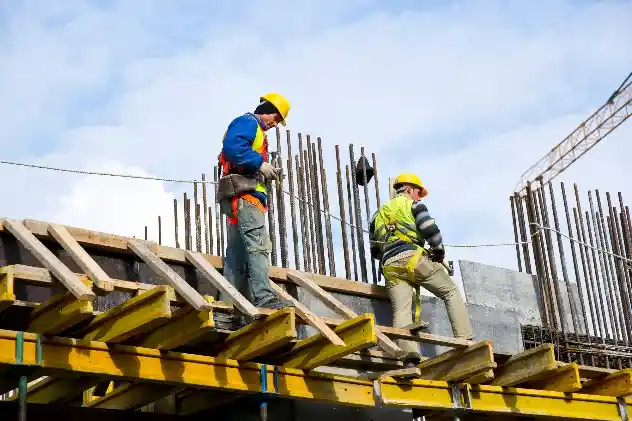
Construction and building skills for residential and commercial projects.
Why Choose New York Academy
Graduates pursue careers in Construction across residential, commercial, and industrial settings.
What You’ll Learn
✓
Hands-on shop training with industry-standard tools
✓
Small class sizes with individualized instruction
✓
Taught by working trade professionals
At New York Academy, we invite you to build the future of humanity. Our Construction Technology career program prepares you with world-class technical skills and a comprehensive understanding of the construction industry, blending advanced theoretical knowledge with intensive practical experience in real projects through our revolutionary hybrid modality.
Build Your Future in the Industry that Builds the World
The construction revolution is here: Building Information Modeling (BIM), sustainable construction, smart materials, automation, and digital technologies have transformed traditional construction into a 21st-century high-tech industry, with unlimited opportunities in:
Residential Construction: Smart homes, sustainable buildings, urban developments, and housing complexes
Commercial Construction: Shopping centers, corporate offices, hotels, hospitals, and institutional buildings
Industrial Construction: Manufacturing plants, logistic warehouses, data centers, and specialized facilities
Civil Infrastructure: Roads, bridges, tunnels, airports, ports, and transportation projects
Green Construction: LEED buildings, renewable energy, sustainable construction, and bioclimatic architecture
Technical Excellence and Construction Innovation
Join a pioneering educational community that integrates international technical rigor, cutting-edge construction technologies, and innovative learning methodologies, developing leadership skills, project management, and environmental sustainability.
Train professionals with a deep understanding of the theoretical and practical fundamentals of construction, capable of designing, planning, executing, and managing complex construction projects that contribute to infrastructure development.
Fundamental Competencies in Construction
Develop a comprehensive mastery of the mathematical, structural, and technical principles that govern modern construction systems, enabling students to:
Understand and apply principles of material resistance, structures, and soil mechanics
Master advanced construction techniques and innovative construction systems
Interpret architectural, structural, and technical installation plans
Manage construction materials, specialized equipment, and constructive technologies
Apply principles of construction planning, project management, and project control
Development of Projects and Smart Construction Systems
Train versatile professionals in the execution of construction projects and the implementation of intelligent technologies, developing capabilities to:
Design and develop robust and efficient residential, commercial, and industrial construction projects
Intervene in Building Information Modeling (BIM) and Construction 4.0
Maintain home automation systems, smart buildings, and sustainable construction
Work with specialized software such as AutoCAD, Revit, SAP2000, ETABS, and BIM platforms
Execute projects involving prefabrication, modular construction, and innovative constructive techniques
Analysis and Resolution of Advanced Construction Problems
Provide training in cutting-edge analysis and problem-solving methodologies, enabling professionals to:
Utilize tools for structural analysis, quality control, and optimization of construction processes
Identify and correct failures in large-scale structures, installations, and construction processes
Apply industrial safety techniques, risk prevention, and construction regulations in project design
Evaluate the efficiency and sustainability of construction systems and structural architectures
Document construction designs, technical solutions, and research projects with professional standards
Emerging Technologies and the Future of Construction
Integrate cutting-edge technological knowledge and an innovative vision, preparing professionals capable of:
Implementing digital construction technologies and 3D printing in construction
Working with modular construction systems and automated prefabrication
Optimizing high-performance construction infrastructures and complex buildings
Applying green building techniques, energy efficiency, and environmental certifications
Complying with ethical regulations and social responsibility protocols in construction
Professional Skills and Construction Leadership
Develop transversal competencies that enhance comprehensive professional development and leadership:
Effective technical communication with multidisciplinary teams and stakeholders
Management of construction projects and administration of work teams
Leadership of research and development (R&D) initiatives in construction technologies
Entrepreneurship and business development in the construction sector and technical services
Continuous updating on new construction technologies, methodologies, and global certifications
An intensive 24-month academic program structured into 8 trimesters, with a total of 4,240 academic hours distributed among theoretical training, field practice, and real construction project experience.
First Trimester — Technical and Scientific Foundations (Year 1)
Applied geometry, trigonometry, area and volume calculation, basic statistics, technical drawings
Mechanics, strength of materials, statics, dynamics, hydraulics, applied acoustics and thermal physics
History of construction, basic construction processes, technical terminology, site organization
Technical drawing, interpretation of architectural, structural, and installation plans, scales
Second Trimester — Materials and Construction Systems (Year 1)
Aggregates, cement, admixtures, mix design, quality testing, ready-mix concrete, quality control
Metal profiles, welded and bolted connections, structure assembly, structural codes
Bricks, blocks, mortars, masonry techniques, load-bearing walls, finishes
Wood types, wood structures, modular systems, treatments, joints and connections
Third Trimester — Foundation Systems and Structures (Year 1)
Soil studies, shallow and deep foundations, piles, excavations, retention
Loads, moments, forces, analysis of beams, columns, slabs, structural calculation software
Topography, levels, excavations, backfilling, compaction, heavy machinery, drainage
Rebar assembly, formwork, pouring, curing, joints, repairs, dimensional control
Fourth Trimester — Installations and Finishes (Year 2)
Basic circuits, panels, lighting, outlets, grounding systems, electrical codes
Potable water, drainage, ventilation, pumping systems, water treatment, sanitary code
Heating, ventilation, air conditioning, ducts, diffusers, energy efficiency
Painting, ceramics, flooring, ceilings, carpentry, ironwork, glazing, waterproofing
Fifth Trimester — Advanced Technologies and Sustainability (Year 2)
AutoCAD, Revit, ArchiCAD, 3D modeling, multidisciplinary coordination, interference detection
LEED certification, sustainable materials, energy efficiency, waste management, carbon footprint
High-strength concrete, composite materials, nanotechnology, self-compacting materials
Prefabricated systems, modular construction, industrialization, accelerated assembly
Sixth Trimester — Machinery and Automation (Year 2)
Excavators, cranes, mixers, pumps, compactors, operation and maintenance
Construction robotics, 3D printing, drones for inspection, IoT sensors, Construction 4.0
Material testing, inspection, technical regulations, certifications, quality documentation
OSHA, hazard identification, PPE, emergency protocols, accident investigation
Seventh Trimester — Project and Cost Management (Year 2)
PMI, schedules, critical path, MS Project, resource coordination, risk management
Unit price analysis, budgeting, cost control, valuations, bidding
Types of contracts, bidding, legal aspects, disputes, arbitration, construction insurance
Procurement, warehousing, inventory, just-in-time, suppliers, material distribution
Eighth Trimester — Specialization and Final Project (Year 2)
Roads, bridges, tunnels, airports, ports, transportation systems, hydraulic works
Structural diagnosis, reinforcement, historical heritage, seismic retrofit, rehabilitation
Business plan, construction company, subcontracting, marketing, business finance
Design and construction of a real project, complete documentation, process management
Cross-Cutting Courses (Developed throughout the program)
Specialized terminology, international codes, communication with multinational teams
Impact assessment, mitigation, sustainable construction, circular economy
Building code, seismic regulations, international building code, quality standards
Intensive Practical Experience
Testing of concrete, steel, soils, construction materials, specialized equipment
Real experience in construction works, construction companies, project supervision
During the program, students will be able to obtain international certifications including Project Management Professional (PMP), LEED Green Associate, OSHA 30-Hour Construction, Autodesk Certified Professional, and specific certifications in BIM, sustainable construction, and quality management.
Applicant Profile
New York Academy seeks candidates with a strong vocation for civil engineering and infrastructure project management, aptitude for solving construction challenges, and interest in design and planning tools (CAD/BIM).
Academic Requirements
Certificate of complete secondary education or recognized equivalent, preferably with a STEM emphasis
Advanced knowledge of mathematics (algebra, geometry, trigonometry, differential and integral calculus)
Fundamental understanding of physics (mechanics, statics, dynamics) and materials principles
Developed technical drawing skills or basic blueprint interpretation
Ability for spatial reasoning and three-dimensional visualization
Required Documentation
Duly completed and signed admission application
Authenticated copy of secondary education or high school certificate
Official academic transcript with detailed grades, highlighting mathematics and science courses
Valid identification document (citizenship ID or passport)
Medical certificate attesting to fitness for fieldwork and use of construction equipment
Two recent passport-sized photographs
Letter of motivation explaining interest in the Construction Technology program
Technical Requirements for Hybrid Modality
Computer or laptop with a minimum Intel i5 (8th gen or higher) or AMD Ryzen 5 (2nd gen or higher)
Minimum 8GB RAM (16GB recommended) and 512GB SSD storage
Dedicated graphics card with at least 2GB of VRAM
Stable broadband internet connection (minimum 50 Mbps download)
Student licenses or access to CAD/BIM software (AutoCAD, Revit, SAP2000, etc.)
Financial Requirements
Payment of initial tuition and academic fees according to the study plan
Proof of financial solvency or access to funding that covers the program’s costs
Enrollment in student insurance covering accidents during laboratory practices and field trips
Budget for specialized software or complementary licenses not covered by the institution
Resources for laboratory materials, personal protective equipment, and technical visits
Career Outlook
Graduates pursue careers in Construction across residential, commercial, and industrial settings.

Preparing doers and healers for the future through rigorous certifications in healthcare, ministry, and skilled trades.
Contact Us(518) 708-1373info@newyorkacademy.us