
Combination Welding Technology
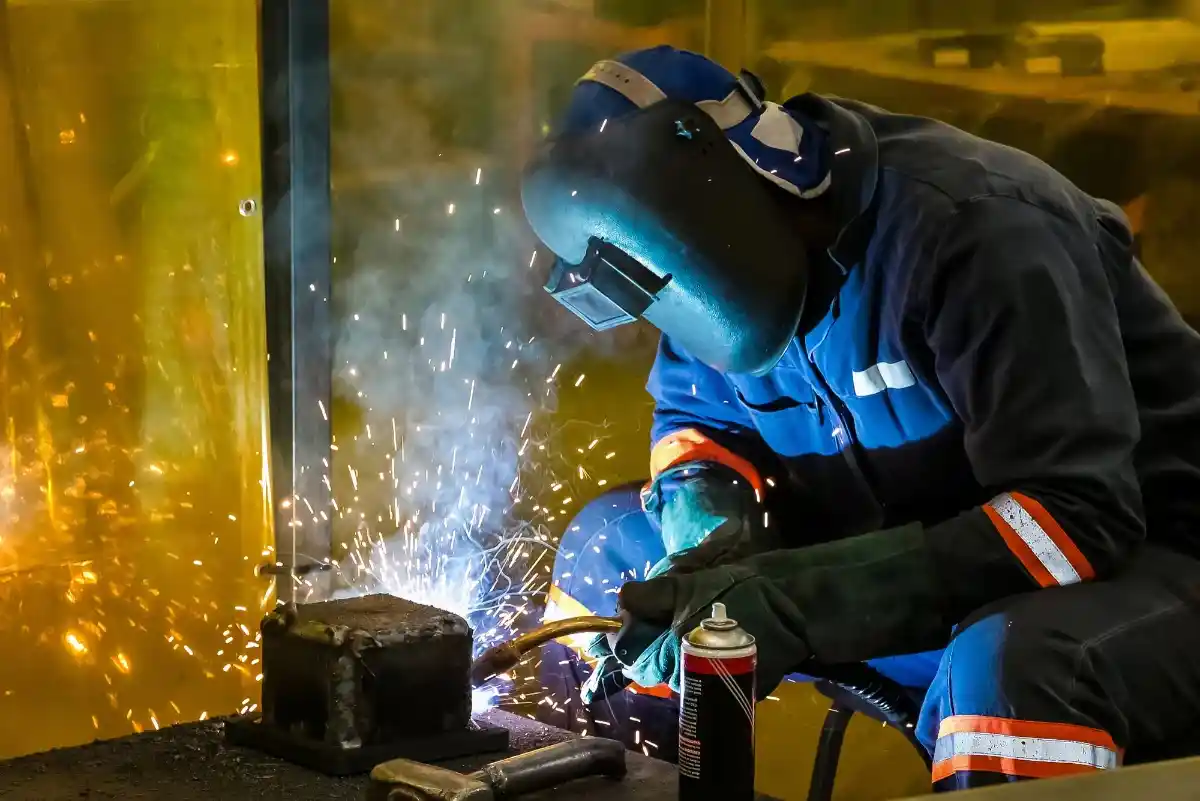
Master multiple welding techniques for industrial applications.
Why Choose New York Academy
Graduates pursue careers in Combination Welding Technology across residential, commercial, and industrial settings.
✓
Hands-on shop training with industry-standard tools
✓
Small class sizes with individualized instruction
✓
Taught by working trade professionals
At New York Academy, we invite you to master one of the most fundamental and versatile technical skills in modern industry. Our Combination Welding Technology program prepares you with world-class technical competencies and a comprehensive perspective, merging advanced theoretical knowledge with intensive practical experience in multiple welding processes through our revolutionary hybrid modality.
Forge Your Future in the Metal Industry
The industrial 4.0 revolution has transformed welding into a high-technology specialization: robotic welding, automated processes, advanced materials, and precision welding techniques have made this one of the most in-demand and best-paid professions in the industrial sector, with unlimited opportunities in:
Aerospace Industry: Precision welding, aeronautical materials, critical structures and specialized components
Naval Construction: Shipyards, commercial vessels, offshore platforms and maritime structures
Oil and Gas: High-pressure pipelines, refinery, petrochemical and energy projects
Construction and Infrastructure: Industrial buildings, bridges, metallic structures and civil projects
Renewable Energy: Wind towers, solar structures, clean energy plants
Technical Excellence and Industrial Innovation
Join a pioneering educational community that integrates international technical rigor, cutting-edge welding technologies, and innovative learning methodologies, developing inspection skills, quality control, and industrial leadership.
Train specialized technicians in integrated welding with advanced technical competencies, an international technological vision, and a commitment to excellence. Graduates will be capable of executing, supervising, and managing complex welding processes in aerospace, naval, petrochemical, structural, and manufacturing sectors.
Core Technical Competencies
Develop comprehensive mastery of metallurgical, physical, and technological principles governing modern industrial welding, enabling students to:
Master applied mathematics, advanced metallurgy, and specialized materials science
Understand crystalline structures, alloys, phase transformations, and heat treatments
Interpret welding symbols, technical blueprints, and engineering specifications
Operate specialized welding equipment, industrial gases, and precision tools
Implement industrial safety protocols and international welding standards
Specialized Welding Processes
Train versatile professionals in the management of multiple welding processes and advanced technologies, enabling them to:
Perform SMAW (Shielded Metal Arc Welding): advanced positions, specialized electrodes, and critical applications
Master GMAW/GTAW (MIG/TIG Welding): controlled transfer, inert gases, and precision welding
Apply SAW and PAW (Submerged Arc and Plasma Arc Welding): automated processes and high deposition
Operate resistance welding: automated equipment, automotive applications, and process control
Execute oxyacetylene welding: cutting techniques, strong brazing, and specialized repairs
Advanced Materials and Specialized Applications
Equip students to weld advanced materials and work on high-technology applications, enabling them to:
Weld stainless steels: austenitic, ferritic, duplex, and sanitary applications
Work with aluminum and its alloys: specialized preparation, pulsed MIG, and aerospace applications
Weld nickel alloys: Inconel, Hastelloy, and high-temperature applications
Perform titanium welding: controlled environments, medical, and aerospace uses
Develop underwater welding: specialized equipment and critical safety protocols
Automation and Emerging Technologies
Integrate cutting-edge knowledge in automation and intelligent welding, preparing professionals to:
Program robotic welding systems: complex trajectories, process sensors, and CAD/CAM integration
Implement automated systems: PLCs, HMI interfaces, and automated quality control
Apply laser welding: fiber optic technology, keyhole welding, and precision applications
Operate electron beam welding: vacuum chambers, deep penetration, and CNC control
Integrate Industry 4.0: IoT sensors, remote monitoring, and smart welding technologies
Advanced Inspection and Quality Control
Develop specialized competencies in inspection and quality assurance, enabling students to:
Perform non-destructive testing (NDT): radiography, ultrasound, liquid penetrant, and magnetic particle testing
Apply comprehensive quality control: inspection systems, acceptance criteria, and documentation
Conduct metallography and destructive testing: microscopy, tensile, impact, and hardness analysis
Execute failure analysis: fractographic investigation, root cause analysis, prevention strategies
Apply international codes: AWS, ASME, API, and interpretation of global standards
Intensive 24-month academic program structured in 8 trimesters, with a total of 4,280 academic hours distributed in theoretical training, workshop practice, and experience in industrial projects.
First Trimester — Metallurgical and Scientific Foundations (Year 1)
Applied geometry, trigonometry, volume calculations, unit conversions, technical drawing interpretation
Crystalline structure, alloys, phase transformations, heat treatments, mechanical properties
Welding history, physical principles, joint types, symbology, basic industrial safety
Welding machines, electrodes, gases, auxiliary tools, preventive maintenance
Second Trimester — Basic Welding Processes (Year 1)
Ignition techniques, straight beads, basic positions, cellulosic and basic electrodes, common defects
Equipment setup, shielding gases, wires, metal transfer, aluminum welding
Tungsten techniques, noble gases, filler rods, stainless steel welding
Oxycutting equipment, flames, welding and cutting techniques, autogenous welding, hard brazing
Third Trimester — Advanced and Specialized Processes (Year 1)
Plasma technology, specialized equipment, industrial applications, precision welding
Fluxes, multiple wires, automatic welding, thick plate applications
Self-shielded wires, outdoor applications, high deposition welding, fume control
Spot welding, seam welding, projection welding, automated equipment, automotive applications
Fourth Trimester — Positions and Qualifications (Year 2)
Vertical welding, overhead, horizontal, 6G pipe, progression techniques, puddle control
AWS, ASME, API codes, qualification procedures, destructive and non-destructive testing
WPS development, essential variables, PQR, technical documentation, quality control
Preheating, PWHT, stress relief, industrial furnaces, temperature control
Fifth Trimester — Special Materials Welding (Year 2)
Austenitic, ferritic, duplex, orbital welding, contamination control, sanitary applications
Aluminum alloys, surface preparation, special techniques, pulsed MIG welding
Inconel, Hastelloy, Monel, aerospace applications, high-temperature welding
Commercial grades, controlled atmosphere chambers, medical and aerospace applications
Sixth Trimester — Automation and Robotics (Year 2)
Robot programming, trajectories, sensors, CAD/CAM system integration
PLCs, HMI interfaces, process sensors, automatic quality control, Industry 4.0
Laser technology, fiber optics, conduction and keyhole welding, precision applications
Vacuum chambers, deep penetration, aerospace applications, CNC control
Seventh Trimester — Inspection and Quality Control (Year 2)
Radiography, ultrasound, liquid penetrants, magnetic particles, result interpretation
Quality systems, visual inspection, acceptance criteria, defect documentation
Sample preparation, microscopy, tensile tests, impact, hardness, bend tests
Failure investigation, fractographic analysis, root causes, prevention, technical reports
Eighth Trimester — Industrial Applications and Final Project (Year 2)
API 1104, ASME B31, 6G welding, qualification testing, in-service repairs
AWS D1.1, industrial buildings, bridges, assembly, field welding
Diving equipment, wet and dry welding, maritime applications, underwater safety
Manufacturing of complex structure applying multiple processes, comprehensive technical documentation
Transversal Courses (Developed throughout the program)
OSHA, gas handling, respiratory protection, ergonomics, risk prevention, first aid
Specialized terminology, international codes, technical communication, global certifications
AWS, ASME, API, ISO, EN, code interpretation, specific applications
Intensive Practical Experience
Practices in workshops with cutting-edge industrial equipment, automated booths
Real experience in shipyards, industrial plants, specialized manufacturing workshops
During the program, students will be able to obtain international certifications recognized by the industry, including AWS Certified Welding Inspector (CWI), API 1104 Pipeline Welding, ASME Section IX, AWS D1.1 Structural Welding, NDT Level II in multiple methods, and manufacturer-specific certifications such as Lincoln Electric, Miller and ESAB.
Applicant Profile
New York Academy seeks candidates with technical vocation, genuine passion for metallurgy and industrial processes, exceptional manual dexterity, and physical resilience for intensive industrial activities.
Academic Requirements
Complete secondary education certificate or recognized equivalent
Solid knowledge of mathematics (algebra, geometry, trigonometry, and technical calculations)
Fundamental understanding of basic physics (mechanics, thermodynamics, electricity, and magnetism)
Reading comprehension, technical communication, and procedure-following skills
Ability to interpret technical blueprints, welding symbols, and industrial specifications
Required Documentation
Admission application properly completed and signed
Official secondary education or high school certificate
Academic transcript with detailed grades
Valid identity document (identity card or passport)
Medical certificate proving physical aptitude for industrial welding work
Two recent passport-size photographs
Motivation letter expressing interest in welding technology and metallurgical processes
Technical Requirements for Hybrid Modality
Computer or laptop with updated operating system and capacity for technical software
Stable broadband internet connection (minimum 10 Mbps)
High-definition webcam for technical demonstrations and remote evaluations
Basic office software and technical design applications
Adequate workspace for technical studies and procedure analysis
Financial Requirements
Initial tuition payment or approved financing plan
Proof of economic solvency or credit guarantee
Student insurance covering practical activities in industrial welding workshops
Budget for specialized personal protective equipment and basic tools
Resources for practice materials, electrodes, and welding consumables
Career Outlook
Graduates pursue careers in Combination Welding Technology across residential, commercial, and industrial settings.

Preparing doers and healers for the future through rigorous certifications in healthcare, ministry, and skilled trades.
Contact Us(518) 708-1373info@newyorkacademy.us