
Vehicle Repair
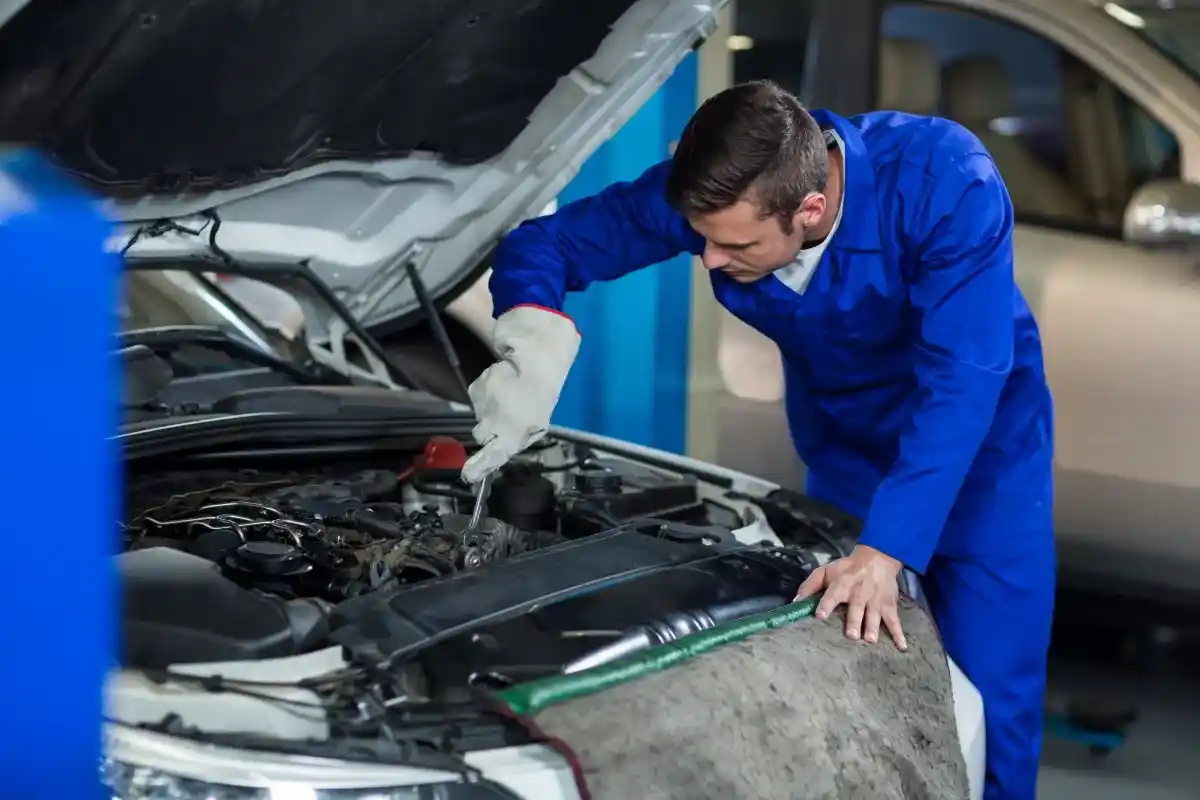
Automotive service and repair career with modern diagnostic tools.
Why Choose New York Academy
Graduates pursue careers in Vehicle Repair across residential, commercial, and industrial settings.
What You’ll Learn
✓
Hands-on shop training with industry-standard tools
✓
Small class sizes with individualized instruction
✓
Taught by working trade professionals
At New York Academy, we invite you to conquer one of the most dynamic and essential industries of the modern world. Our Vehicle Repair Technician program prepares you with world-class technical competencies and a comprehensive perspective, fusing advanced theoretical knowledge with intensive practical experience through our revolutionary hybrid modality.
Master the Future of Mobility
The automotive revolution is here: electric vehicles, hybrid systems, connected technology, and computerized diagnostics have transformed vehicle repair into a highly specialized 21st-century profession. This training strategically positions you in a constantly evolving job market, with unlimited opportunities in:
Advanced automotive sector: Electric, hybrid, and modern combustion vehicles
Diagnostic technology: Computerized systems, professional scanners, and electronic analysis
Premium specialization: Luxury vehicles, sports cars, and cutting-edge technology
Automotive entrepreneurship: Specialized workshops, mobile services, and technical consulting
International market: Global certifications and overseas opportunities
Technical Excellence and Professional Innovation
Join a pioneering educational community that integrates international technical rigor, cutting-edge automotive technology, and innovative learning methodologies, developing business skills, advanced diagnostics, and professional responsibility.
Train specialized technicians in comprehensive automotive repair with advanced technical competencies, international technological vision, and commitment to excellence, capable of diagnosing, repairing, maintaining, and optimizing internal combustion, electric, and hybrid vehicles of multiple brands.
Fundamental Technical Competencies
Develop comprehensive mastery of mechanical, electrical, and electronic principles governing modern automotive systems, enabling students to:
Understand and apply principles of automotive mechanics, thermodynamics, and combustion
Master electronic fuel injection, carburation, and fuel supply systems
Interpret automotive electrical diagrams and computerized control systems
Handle hybrid, electric, and alternative propulsion technologies
Apply electronic diagnostic principles and engine parameter analysis
Multi-Brand Systems and Diverse Technologies
Train versatile professionals in handling different automotive technologies, developing capabilities to:
Repair diesel engines: common rail injection systems, turbochargers, and DPF systems
Service gasoline engines: direct injection, turbo systems, and emission controls
Maintain electric vehicles: high-voltage batteries, electric motors, and charging systems
Work with multiple brands: specific protocols for Ford, Toyota, Chevrolet, Volkswagen, Hyundai, and more
Perform repairs on manual, automatic, and CVT transmissions
Advanced Diagnostics and Problem Resolution
Train in cutting-edge diagnostic methodologies and specialized repair, enabling technicians to:
Use professional automotive scanners and computerized diagnostic equipment
Identify failures in electrical, electronic, mechanical, and emission systems
Apply systematic troubleshooting techniques in complex vehicles
Evaluate engine performance and optimize operating parameters
Document repairs with professional technical reports and detailed estimates
Emerging Technologies and Sustainable Mobility
Integrate cutting-edge technological knowledge and environmental responsibility, preparing professionals capable of:
Implementing vehicle connectivity technologies and ADAS systems
Working with autonomous vehicles and driver assistance systems
Repairing next-generation electric and hybrid propulsion systems
Applying automotive recycling techniques and hazardous waste management
Complying with environmental regulations and international safety protocols
Professional and Business Skills
Develop cross-cutting competencies that enhance comprehensive professional development:
Effective technical communication with customers and specialized service attention
Automotive workshop management and inventory administration
Leadership of technical teams and coordination of complex repairs
Entrepreneurship and business development in the automotive sector
Continuous updating in new technologies and international certifications
Intensive 24-month academic program structured in 8 quarters, with a total of 3,530 academic hours distributed in theoretical training, workshop practice and field experience.
First Quarter — Scientific and Mechanical Foundations (Year 1)
Applied algebra, trigonometry, basic calculus, unit conversions, torque and power calculations
Applied mechanics, automotive thermodynamics, heat transfer, fluid properties, hydraulic and pneumatic pressure
Automotive history, operating principles, main components, vehicle classification, workshop safety
Specialized wrenches, torque wrenches, automotive scanners, oscilloscopes, compression meters, alignment equipment
Second Quarter — Combustion Engines and Systems (Year 1)
Thermodynamic cycles, internal components, timing systems, cylinder heads, pistons, connecting rods
Diesel combustion principles, common rail injection systems, turbochargers, intercoolers, DPF and SCR systems
Multi-point injection, direct injection, MAF/MAP sensors, injectors, ECU, fuel maps, fault diagnosis
Catalytic converters, lambda sensors, EGR valves, EVAP systems, environmental regulations
Third Quarter — Electrical Systems and Transmissions (Year 1)
DC circuits, charging systems, alternators, regulators, batteries, starting systems
Engine ECU, transmission TCU, ABS, ESP, OBD-II diagnostic systems, CAN communication protocols
Gearboxes, clutches, differentials, CV joints, synchronizers, noise diagnosis
Automotive symbols, diagram interpretation, electrical fault location, specialized multimeter use
Fourth Quarter — Power and Braking Systems (Year 2)
Torque converters, planetary gear sets, hydraulic valves, TCU, CVT transmissions
Disc and drum brakes, ABS, ESP, hydraulic systems, brake fluids, vibration diagnosis
Independent suspension, McPherson, multilink, shock absorbers, springs, stabilizer bars
Power steering, electric steering, rack and pinion, hydraulic pumps, angle sensors, calibration
Fifth Quarter — Body and Advanced Systems (Year 2)
Dent repair, body welding, surface preparation, automotive painting techniques, paint booths
Automotive air conditioning, compressors, evaporators, automotive refrigerants, climate diagnosis
LPG systems, CNG, ethanol, biodiesel, fuel tanks, high-pressure pumps, fuel conversions
Computerized balancing, 3D alignment, vehicle geometry, TPMS, wear pattern diagnosis
Sixth Quarter — Hybrid and Electric Vehicles (Year 2)
Toyota Hybrid Synergy systems, Honda IMA, electric motors, NiMH batteries, DC/DC converters, HV safety
Three-phase electric motors, lithium batteries, BMS systems, chargers, inverters, high voltage diagnosis
Hydrogen systems, fuel cells, flex-fuel engines, clean combustion technologies
Specific protocols Toyota, Ford, GM, Volkswagen, brand-specific scanners, key programming
Seventh Quarter — Emerging Technologies and Specialization (Year 2)
Radar sensors, cameras, LIDAR, automatic braking systems, adaptive cruise control, ADAS calibration
BMW, Mercedes-Benz, Audi, Volvo specific protocols and specialized diagnosis
Toyota, Honda, Nissan, Hyundai, Kia particular technologies and specific protocols
Infotainment systems, Bluetooth connectivity, vehicular WiFi, OTA updates, remote diagnosis
Eighth Quarter — Management and Final Project (Year 2)
Workshop administration, repair costs, customer service, inventory, management software, marketing
AR/VR technologies for diagnosis, predictive maintenance, digital interfaces, mobile applications
Conventional carburetors, mixture adjustments, cold start systems, mechanical fuel pumps
Development of complete technical project applying knowledge acquired in advanced vehicle repair
Cross-curricular Courses (Developed throughout the program)
Automotive safety standards, PPE, first aid, workshop risk prevention, chemical handling
Specialized terminology, technical manuals, international communication, fault codes in English
SAE, ISO, local regulations, international certifications, automotive quality standards
Intensive Practical Experience
Practices in workshops equipped with cutting-edge automotive technology, diagnostic laboratories
Real experience in workshops, dealerships and specialized service centers
During the program, students will be able to obtain international certifications recognized by the industry, including ASE (Automotive Service Excellence), certifications from leading manufacturers such as Toyota, Ford, GM, Volkswagen, Honda, Hyundai, BMW, Mercedes-Benz and Audi, certifications in electric and hybrid vehicles, and specialization in ADAS systems.
Applicant Profile
New York Academy seeks candidates with technical vocation, genuine passion for automotive mechanics, and commitment to professional excellence, with curiosity about vehicles and their systems and technical problem-solving skills.
Academic Requirements
Complete high school diploma or recognized equivalent certificate
Basic mathematics knowledge (applied algebra and geometry)
Fundamental understanding of basic physics (mechanics, electricity, and elementary thermodynamics)
Reading comprehension and written communication skills
Ability to follow technical manuals and automotive diagrams
Required Documentation
Completed and signed admission application
Official high school or secondary education certificate
Academic transcript with detailed grades
Valid identification document (identity card or passport)
Medical certificate proving physical fitness for automotive technical work
Two recent passport-size photographs
Motivation letter expressing interest in automotive repair
Technical Requirements for Hybrid Modality
Computer or laptop with updated operating system
Stable broadband internet connection (minimum 10 Mbps)
Webcam and microphone for virtual diagnostic classes
Basic office software and automotive diagnostic applications
Adequate workspace for remote theoretical studies
Financial Requirements
Initial tuition payment or approved financing plan
Proof of economic solvency or credit guarantee
Student insurance covering practical workshop activities
Budget for basic tools and personal diagnostic kit
Resources for automotive laboratory expenses and specialized practices
Career Outlook
Graduates pursue careers in Vehicle Repair across residential, commercial, and industrial settings.

Preparing doers and healers for the future through rigorous certifications in healthcare, ministry, and skilled trades.
Contact Us(518) 708-1373info@newyorkacademy.us