
Culinary Arts
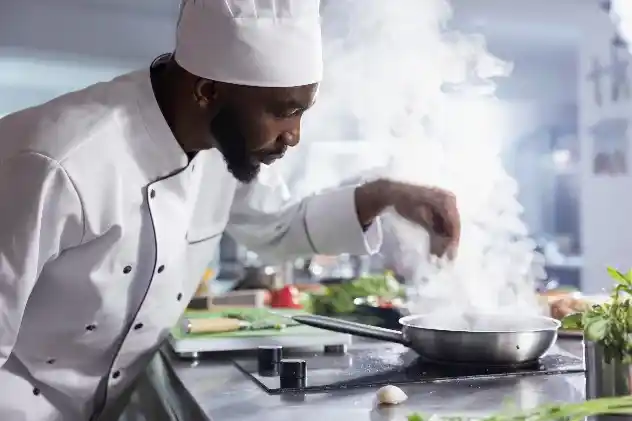
Professional culinary training with international gastronomy techniques.
Why Choose New York Academy
Graduates pursue careers in Culinary Arts across residential, commercial, and industrial settings.
What You’ll Learn
✓
Hands-on shop training with industry-standard tools
✓
Small class sizes with individualized instruction
✓
Taught by working trade professionals
At New York Academy, we invite you to conquer the fascinating world of international gastronomy. Our Culinary Arts program equips you with world-class culinary skills and a comprehensive gastronomic perspective, blending traditional techniques with modern culinary innovation through our revolutionary hybrid learning model.
Shape Your Future in Global Culinary Arts
The culinary revolution is here: molecular gastronomy, cutting-edge techniques, international fusion, food sustainability, and culinary technology have transformed traditional culinary arts into a 21st-century industry of innovation, unlocking unlimited opportunities in:
Fine Dining: Luxury restaurants, signature cuisine, Michelin-starred establishments, and exclusive culinary experiences
International Hospitality: Hotel chains, resorts, cruise lines, culinary tourism, and world-class hospitality
Specialized Gastronomy: Vegan, molecular, fusion, ethnic, gluten-free, and emerging food trends
Catering Industry: Corporate events, weddings, large-scale catering, specialized services, and banquets
Culinary Entrepreneurship: Own restaurant, gourmet food trucks, high-end delivery services, and artisanal products
Culinary Excellence and Gastronomic Innovation
Join a pioneering educational community that combines classical culinary techniques, avant-garde gastronomy, and innovative learning methodologies, developing creativity, kitchen leadership, and gastronomy management skills.
Train chefs with advanced gastronomic competencies, an international culinary vision, and a strong commitment to excellence, capable of creating, developing, managing, and leading exceptional culinary experiences in professional kitchens.
Core Technical Competencies
Develop comprehensive mastery of classical and modern culinary techniques that define contemporary professional gastronomy, enabling students to:
Master fundamental knife skills, cutting techniques, and basic ingredient preparation
Apply moist and dry heat cooking methods with precise control of temperatures and timing
Prepare stocks, broths, mother sauces, and derivative sauces following classical French techniques
Operate professional kitchen equipment, culinary technology, and specialized tools
Implement HACCP protocols, food safety practices, and international sanitation standards
Specialization in Proteins and Advanced Techniques
Train versatile professionals in handling various ingredients and specialized culinary techniques, enabling them to:
Prepare red meats: specialized cuts, aging, marinating, and perfect grilling techniques
Handle poultry and game: professional butchery, stuffing, confit, and advanced cooking methods
Work with fish and seafood: species identification, filleting, and specialized cooking techniques
Master grains and cereals: rice dishes, fresh pastas, risottos, and precise cooking methods
Execute artisanal baking and classical pastry with fermentation and decoration techniques
International Cuisines and Gastronomic Traditions
Train students in global culinary traditions and international gastronomic techniques, enabling chefs to:
Master classical French cuisine: traditional techniques, sauces, and elegant presentations
Execute authentic Italian cuisine: fresh pastas, risottos, and regional traditions
Implement Asian cuisines: wok techniques, sushi, curries, and professional dim sum
Develop Latin American cuisine: pre-Columbian techniques, modern fusion, and native flavors
Create international fusion dishes that combine global gastronomic traditions
Modern Gastronomy and Culinary Innovation
Integrate cutting-edge gastronomic knowledge and innovative techniques, preparing chefs capable of:
Apply molecular gastronomy: spherification, gelification, foams, and innovative textures
Develop vegan and vegetarian cuisine: plant-based proteins, advanced techniques, and creativity
Implement dietary and healthy cuisine: applied nutrition, special diets, and superfoods
Execute food styling and culinary photography for digital media and social networks
Create memorable culinary experiences with artistic presentation and constant innovation
Culinary Management and Gastronomic Leadership
Develop management and leadership skills for comprehensive culinary operations:
Design menus and cost analysis: menu engineering, pricing, and culinary profitability
Lead kitchen brigades: organization, productivity, quality control, and staff development
Manage catering and banquets: large-scale events, specialized logistics, and complex services
Develop wine and beverage pairing skills: wines, craft beers, and perfect pairings
Implement culinary sustainability: zero waste practices, local sourcing, and responsible agriculture
3,580 academic hours distributed across theoretical instruction, intensive culinary practice, and experience in professional kitchens over 8 quarters.
First Quarter — Culinary and Scientific Foundations (Year 1)
History of gastronomy, culinary terminology, kitchen organization, classical brigade system
Chemical composition, transformations during cooking, fermentation, preservation, food microbiology
Knife types, basic and advanced techniques, brunoise, julienne, chiffonade
Sanitary regulations, hazard analysis, critical control points, personal hygiene, storage protocols
Second Quarter — Basic Cooking Techniques (Year 1)
Boiling, steaming, poaching, braising, stewing, sous vide cooking, temperature control
Roasting, baking, sautéing, frying, grilling, broiling, caramelization techniques
Fond blanc, fond brun, fumet, consommé, mother sauces, derivatives, emulsions
Preparation techniques, vegetable cookery, preserves, pickles, vegetable fermentation
Third Quarter — Proteins and Grains (Year 1)
Meat cuts, aging, marinades, cooking techniques, internal temperatures, butchery skills
Poultry preparation, breakdown, stuffing, confit techniques, special methods
Species identification, cleaning, filleting, fish cookery, crustaceans, mollusks
Rice varieties, quinoa, pasta, risottos, pilaf, legumes, perfect cooking techniques
Fourth Quarter — Baking and Basic Pastry (Year 1)
Sourdough starters, fermentation, artisan breads, kneading techniques, professional baking
Basic doughs, creams, meringues, mousses, tarts, basic decoration techniques
Chocolate tempering, bonbons, truffles, pralines, artistic chocolate work
Gelatos, sorbets, granitas, semi-freddo, parfaits, freezing techniques
Fifth Quarter — International Cuisines (Year 2)
Classical techniques, signature dishes, French sauces, elegant presentation, French protocol
Fresh pasta, risottos, regional sauces, northern and southern cuisine, family traditions
Chinese, Japanese, Thai, Indian cuisine, wok techniques, sushi, curry, dim sum
Mexican, Peruvian, Argentine, Brazilian cuisine, pre-Columbian techniques, modern fusion
Sixth Quarter — Modern and Specialized Gastronomy (Year 2)
Spherification, gelification, foams, liquid nitrogen, innovative textures, artistic presentation
Plant proteins, substitutes, vegan techniques, plant-based nutrition, vegetable creativity
Combining traditions, innovative techniques, modern presentations, culinary creativity
Applied nutrition, special diets, gluten-free, diabetic, low-calorie, superfoods
Seventh Quarter — Management and Services (Year 2)
Menu engineering, cost analysis, pricing strategies, profitability, seasonality, trends
Kitchen organization, leadership, staff management, productivity, quality control
Large-scale events, logistics, setup, service coordination, high-volume menus
Wines, craft beers, spirits, perfect pairings, tasting techniques, beverage service
Eighth Quarter — Specialization and Entrepreneurship (Year 2)
High-end pastry, artistic decoration, sugar work, complex structures
Visual presentation, photographic techniques, media styling, social media, visual marketing
Business planning, restaurant ventures, food trucks, catering, culinary marketing, finance
Complete gastronomic concept development, signature menu creation, final presentation
Cross-Curricular Courses (Developed throughout the program)
Macronutrients, micronutrients, therapeutic diets, balanced nutrition, supplementation
Zero waste, local products, seasonality, carbon footprint, sustainable agriculture
Service excellence, protocol, complaint handling, diner experience
Intensive Practical Experience
Practice in professional kitchens equipped with cutting-edge gastronomic technology
Real-world experience in high-end restaurants, hotels, recognized establishments
During the program, students will be able to obtain internationally recognized certifications including ServSafe Manager, HACCP Certificate, Certified Executive Chef (CEC), Wine & Spirit Education Trust (WSET), and specific certifications such as Sushi Chef, Pasta Master, and Chocolate Specialist.
Applicant Profile
New York Academy seeks candidates with a strong vocation for civil engineering and infrastructure project management, aptitude for solving construction challenges, and interest in design and planning tools (CAD/BIM).
Academic Requirements
Certificate of complete secondary education or recognized equivalent, preferably with a STEM emphasis
Advanced knowledge of mathematics (algebra, geometry, trigonometry, differential and integral calculus)
Fundamental understanding of physics (mechanics, statics, dynamics) and materials principles
Developed technical drawing skills or basic blueprint interpretation
Ability for spatial reasoning and three-dimensional visualization
Required Documentation
Duly completed and signed admission application
Authenticated copy of secondary education or high school certificate
Official academic transcript with detailed grades, highlighting mathematics and science courses
Valid identification document (citizenship ID or passport)
Medical certificate attesting to fitness for fieldwork and use of construction equipment
Two recent passport-sized photographs
Letter of motivation explaining interest in the Construction Technology program
Technical Requirements for Hybrid Modality
Computer or laptop with a minimum Intel i5 (8th gen or higher) or AMD Ryzen 5 (2nd gen or higher)
Minimum 8GB RAM (16GB recommended) and 512GB SSD storage
Dedicated graphics card with at least 2GB of VRAM
Stable broadband internet connection (minimum 50 Mbps download)
Student licenses or access to CAD/BIM software (AutoCAD, Revit, SAP2000, etc.)
Financial Requirements
Payment of initial tuition and academic fees according to the study plan
Proof of financial solvency or access to funding that covers the program’s costs
Enrollment in student insurance covering accidents during laboratory practices and field trips
Budget for specialized software or complementary licenses not covered by the institution
Resources for laboratory materials, personal protective equipment, and technical visits
Career Outlook
Graduates pursue careers in Culinary Arts across residential, commercial, and industrial settings.

Preparing doers and healers for the future through rigorous certifications in healthcare, ministry, and skilled trades.
Contact Us(518) 708-1373info@newyorkacademy.us