
Electrical
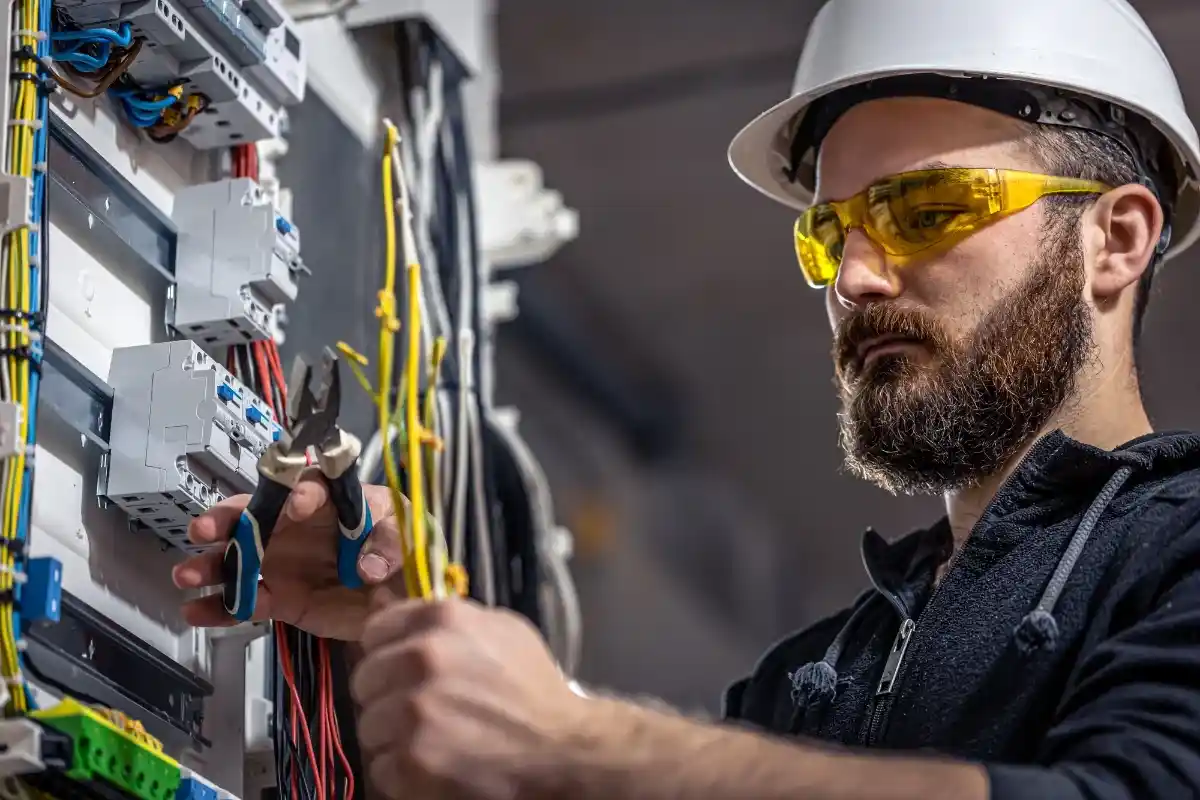
Electrical technology career covering residential, commercial and industrial systems.
Why Choose New York Academy
Graduates pursue careers in Electrical across residential, commercial, and industrial settings.
What You’ll Learn
✓
Hands-on shop training with industry-standard tools
✓
Small class sizes with individualized instruction
✓
Taught by working trade professionals
At New York Academy, we invite you to energize your future in one of the most essential industries of the modern world. Our Electrical Technology program prepares you with world-class electrical competencies and a comprehensive technological perspective, blending advanced theoretical knowledge with intensive practical experience in cutting-edge electrical systems through our revolutionary hybrid modality.
Connect with the Future of Energy and Technology
The electrical revolution is here: smart systems, renewable energy, industrial automation, advanced home automation, and smart grids have transformed traditional electricity into a high-tech 21st-century specialization, with limitless opportunities in:
Renewable Energy: Solar, wind, hydroelectric systems, energy storage, and smart microgrids
Industrial Automation: PLCs, robotics, SCADA systems, Industry 4.0, and automated process control
Residential Installations: Smart homes, home automation, security systems, and energy efficiency
Commercial Installations: Corporate buildings, shopping centers, hospitals, and high-demand systems
Electric Vehicles: Charging stations, electric propulsion systems, and EV technology
Technical Excellence and Energy Innovation
Join a pioneering educational community that integrates international technical rigor, cutting-edge electrical technologies, and innovative learning methodologies, developing advanced diagnostic skills, electrical safety expertise, and technological leadership.
Train specialized electrical technicians with advanced technical competencies, a comprehensive technological vision, and a commitment to excellence, capable of designing, installing, maintaining, and leading highly complex electrical projects in modern systems.
Core Technical Competencies
Develop comprehensive mastery of the electrical and scientific fundamentals governing modern electrical technology, enabling students to:
Master applied mathematics for electricity, circuit analysis, and complex electrical calculations
Apply fundamental principles of electricity, magnetism, and electromagnetism in practical systems
Implement OSHA and NFPA 70E electrical safety protocols, including lockout/tagout procedures
Operate specialized measurement equipment: multimeters, oscilloscopes, power analyzers
Perform accurate technical analysis of direct and alternating current circuits
Specialization in Electric Machines and Power Systems
Train versatile professionals in handling transformers, electric motors, and power systems, developing the ability to:
Install, maintain, and troubleshoot power and distribution transformers
Work with AC and DC motors, including starting, speed control, and protection systems
Implement motor control systems with contactors, relays, and specialized control centers
Configure and program variable frequency drives for industrial applications
Design grounding systems, lightning protection, and earth resistance measurement systems
Integrated Electrical Installations and Electrical Code
Training in residential, commercial, and industrial electrical installations in accordance with international standards, enabling technicians to:
Carry out complete residential installations: panels, branch circuits, GFCI, AFCI, and emergency systems
Implement commercial installations: lighting systems, industrial motors, and special loads
Develop high-voltage industrial installations: industrial plants, power systems, and distribution networks
Interpret and apply the National Electrical Code (NEC), including updates and practical applications
Conduct electrical inspections, quality control, and supervision of complex electrical projects
Industrial Automation and Advanced Technologies
Integrate knowledge of automation, industrial control, and emerging technologies, preparing technicians capable of:
Program programmable logic controllers (PLCs) using ladder logic and HMI systems
Implement SCADA systems for supervision, data acquisition, and industrial process control
Work with industrial sensors, instrumentation, and closed-loop control systems
Integrate industrial robotic systems with basic programming and safety protocols
Apply Industry 4.0, industrial IoT, and cybersecurity concepts in control systems
Renewable Energies and Energy Sustainability
Develop competencies in clean technologies and sustainable energy systems to:
Design and install photovoltaic systems: solar panels, inverters, batteries, and grid connection
Implement wind energy systems: wind turbines, turbine control, and specialized maintenance
Configure energy storage systems: lithium batteries, UPS, and energy management systems
Develop smart microgrids and demand-side energy management systems
Conduct energy audits, obtain green certifications, and implement energy efficiency strategies
4,210 total academic hours distributed across theoretical instruction, laboratory practice, and real-world installation experience over 8 quarters.
First Quarter — Electrical and Scientific Foundations (Year 1)
Algebra, trigonometry, complex numbers, vector calculus, circuit analysis, unit conversions
Ohm’s Law, Kirchhoff’s Laws, AC/DC current, power, energy, magnetism, electromagnetism
OSHA standards, NFPA 70E, electrical PPE, lockout procedures, first aid, risk prevention
Multimeters, oscilloscopes, power analyzers, megohmmeters, clamp meters, calibration
Second Quarter — Circuits and Basic Systems (Year 1)
Nodal analysis, mesh analysis, network theorems, voltage dividers, series/parallel resistances
Phasors, impedance, reactance, resonance, power factor, AC power analysis
Principles, types, connections, power transformers, distribution transformers, testing
DC motors, generators, operating principles, characteristics, starting methods, basic control
Third Quarter — Motors and Controls (Year 1)
Synchronous motors, induction motors, single-phase, three-phase, starting methods, speed control
Starters, contactors, relays, timers, protection devices, motor control centers
PWM principles, configuration, programming, industrial applications, energy efficiency
Generation, transmission, distribution, substations, basic protection, power quality
Fourth Quarter — Electrical Installations (Year 1)
Residential electrical code, panels, branch circuits, GFCI, AFCI, grounding systems
Commercial systems, lighting, motors, special loads, emergency systems, NEC code
Industrial plants, high voltage, power systems, industrial distribution, maintenance
Grounding theory, grounding systems, lightning protection, resistance measurement
Fifth Quarter — Automation and Control (Year 2)
PLC hardware, ladder programming, functions, HMI systems, industrial communications
Supervision, data acquisition, interfaces, industrial networks, cybersecurity
Industrial sensors, transducers, signal conditioning, calibration, closed-loop systems
Robotic systems, basic programming, electrical integration, robotic safety
Sixth Quarter — Renewable Energy (Year 2)
Solar panels, inverters, batteries, system design, installation, maintenance
Wind turbines, control systems, grid connection, maintenance, small-scale systems
Lithium batteries, UPS systems, microgrids, energy management, efficiency
Smart meters, communications, demand management, renewable integration
Seventh Quarter — Advanced Technologies (Year 2)
KNX systems, BMS systems, intelligent lighting, HVAC control, integrated security
Charging stations, propulsion systems, EV batteries, charging infrastructure
Substations, protection systems, circuit breakers, disconnectors, preventive maintenance
Harmonics, distortion, power factor, filters, quality analysis, correction methods
Eighth Quarter — Management and Capstone Project (Year 2)
Planning, budgeting, bidding, supervision, quality control, safety management
Thermography, vibration analysis, dielectric oils, condition-based maintenance
Electrical service business, licensing, insurance, marketing, business management
Design and implementation of complete electrical system, comprehensive technical documentation
Cross-Curricular Courses (Developed throughout the program)
NEC standards, code interpretation, updates, practical applications, inspections
Specialized terminology, technical manuals, international communication, certifications
Control system security, industrial network protection, vulnerability assessment
Intensive Practical Experience
Hands-on practice with cutting-edge industrial equipment, high-voltage simulators
Real-world experience in electrical companies, industrial plants, installation projects
During the program, students will be able to obtain internationally recognized certifications including NECA, IES, OSHA 30-Hour Construction, NFPA 70E Electrical Safety, NABCEP Solar PV Installation Professional, and manufacturer-specific certifications from Siemens, Allen-Bradley and Schneider Electric.
Applicant Profile
New York Academy seeks candidates with a technical vocation, genuine passion for electrical technology, analytical and problem-solving skills, and physical aptitude for intensive technical work.
Academic Requirements
High school diploma or equivalent recognized certification
Solid knowledge of mathematics (algebra, geometry, trigonometry, and basic calculus)
Basic understanding of physics (electricity, magnetism, and basic mechanics)
Strong reading comprehension and effective technical communication skills
Ability to interpret electrical diagrams, technical schematics, and safety procedures
Required Documentation
Completed and signed admission application form
Official high school diploma or equivalent certification
Academic transcript with detailed grades
Valid identification document (national ID or passport)
Medical certificate confirming physical fitness for intensive electrical work
Two recent passport-sized photographs
Motivation letter expressing passion for electrical technology
Technical Requirements for Hybrid Modality
Computer or laptop with an updated operating system
Stable broadband internet connection (minimum 10 Mbps)
High-definition webcam for virtual technical demonstrations
Basic office software and electrical design applications
Basic workspace for technical practices and electrical projects
Financial Requirements
Payment of initial tuition fee or approved financing plan
Proof of financial solvency or credit guarantor
Student insurance covering practical activities in electrical laboratories
Budget for professional electrical toolkits and basic measuring instruments
Resources for materials, electrical lab expenses, and technical practices
Career Outlook
Graduates pursue careers in Electrical across residential, commercial, and industrial settings.

Preparing doers and healers for the future through rigorous certifications in healthcare, ministry, and skilled trades.
Contact Us(518) 708-1373info@newyorkacademy.us