
Plumbing and Pipefitting
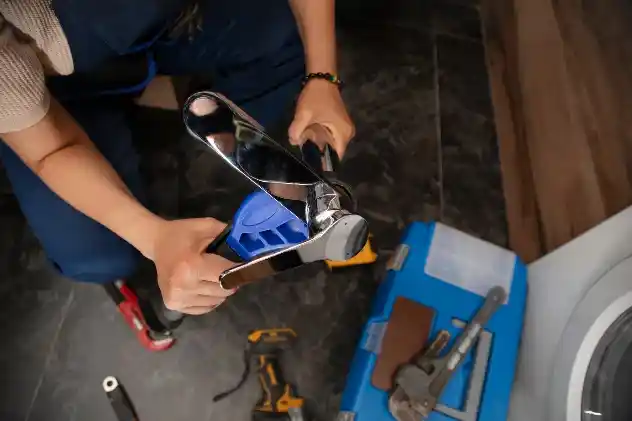
Plumbing and pipefitting skills for modern installation projects.
Why Choose New York Academy
Graduates pursue careers in Plumbing and Pipefitting across residential, commercial, and industrial settings.
What You’ll Learn
✓
Hands-on shop training with industry-standard tools
✓
Small class sizes with individualized instruction
✓
Taught by working trade professionals
At New York Academy, we invite you to flow toward a prosperous future in one of the most essential specialties of modern infrastructure. Our Technology in Plumbing, Pipefitting and Water Systems program prepares you with world-class hydraulic competencies and a comprehensive technical perspective, merging traditional knowledge with cutting-edge technologies in water and sanitation systems through our revolutionary hybrid learning modality.
Connect with the Future of Hydraulic Systems
The hydraulic revolution is here: intelligent water systems, advanced material piping, sustainable plumbing, hydraulic automation, and water conservation technologies have transformed traditional plumbing into a high-tech 21st-century specialization, offering unlimited opportunities in:
Residential Construction: Single-family homes, condominiums, apartments, smart homes, and home automation systems
Commercial Projects: Corporate buildings, shopping centers, hospitals, schools, and industrial complexes
Municipal Infrastructure: Distribution networks, treatment plants, sewage systems, and public works
Specialized Systems: Automated irrigation, pools, spas, fire protection systems, and medical plumbing
Green Technologies: Rainwater collection systems, greywater recycling, and water efficiency solutions
Technical Excellence and Hydraulic Innovation
Join a pioneering educational community that integrates international technical rigor, cutting-edge hydraulic technologies, and innovative learning methodologies, developing advanced diagnostic skills, precision installation capabilities, and leadership in hydraulic projects.
Train specialized technicians in comprehensive hydraulic systems with advanced technical competencies, international technological vision, and commitment to excellence, capable of designing, installing, maintaining, and optimizing residential, commercial, and industrial plumbing systems.
Fundamental Technical Competencies
Develop comprehensive mastery of hydraulic, mechanical, and technological principles governing modern plumbing systems, enabling students to:
Understand and apply principles of fluid mechanics, hydrostatic pressure, and flow dynamics
Master potable water distribution systems, drainage networks, and sanitary sewerage
Interpret technical hydraulic blueprints and specialized engineering specifications
Handle intelligent technologies, IoT systems, and residential hydraulic automation
Apply advanced diagnostic principles and non-destructive leak detection
Advanced Materials and Diverse Technologies
Train versatile professionals in handling different hydraulic materials and technologies, developing capabilities to:
Install copper piping: capillary soldering, flanged connections, and high-pressure systems
Work with PEX and multilayer systems: crimp connections, modern distribution, and rapid installation
Handle PVC and CPVC piping: chemical welding, threaded connections, and specialized applications
Service steel and iron systems: professional threading, specialized welding, and industrial maintenance
Execute natural gas and LPG installations with international safety protocols
Specialized Systems and Complex Applications
Train in high-complexity hydraulic installations and specialized applications, enabling technicians to:
Design fire protection systems: sprinklers, hydrants, and NFPA protection networks
Install medical plumbing: medical gases, sterile water, and hospital emergency systems
Implement automated irrigation systems: sprinkler, drip, and intelligent controllers
Maintain pools and spas: filtration, climate control, and specialized circulation systems
Execute commercial and industrial installations: high-rise buildings and processing plants
Green Technologies and Water Sustainability
Integrate cutting-edge environmental knowledge and water efficiency, preparing professionals capable of:
Implementing rainwater collection systems and water harvesting
Designing greywater recycling networks and residential primary treatment
Installing low-consumption fixtures and water conservation technologies
Applying green certifications and complying with international sustainability standards
Integrating hydraulic home automation and intelligent consumption monitoring systems
Advanced Diagnostics and Problem Resolution
Develop state-of-the-art diagnostic methodologies and specialized repair techniques, training professionals to:
Utilize electronic leak detection equipment and inspection cameras
Identify failures in pressure systems, pumps, and control valves
Apply trenchless repair techniques and no-dig technology
Evaluate hydraulic efficiency and optimize existing distribution systems
Document interventions with technical reports and professional estimates
4,330 total academic hours distributed across theoretical instruction, workshop practice, and real-world installation experience over 8 quarters.
First Quarter — Hydraulic and Scientific Foundations (Year 1)
Flow calculations, pressure, volume, head loss, unit conversions, hydraulic blueprint interpretation
Fluid mechanics, hydrostatic pressure, Pascal’s and Bernoulli’s laws, laminar and turbulent flow, pumps
History of plumbing, basic principles, plumbing codes, technical terminology, workplace safety
Pipe wrenches, welders, cutters, threading machines, leak detectors, pressure equipment
Second Quarter — Materials and Connections (Year 1)
Copper types, tin soldering, capillary connections, specialized tools, repairs
Plastic piping, chemical welding, threaded connections, residential applications, standards
PEX installation, crimp connections, distribution systems, advantages and modern applications
Pipe threading, steel welding, flanged connections, galvanized piping, maintenance
Third Quarter — Distribution Systems (Year 1)
Distribution networks, service connections, meters, valves, pressure systems, water quality
Drains, venting, traps, inspection chambers, slopes, waste evacuation systems
Collection networks, pumping stations, primary treatment, environmental regulations
Natural gas, LPG, regulators, meters, leak detectors, installation safety
Fourth Quarter — Equipment and Accessories (Year 1)
Toilets, sinks, showers, bathtubs, bidets, fixture installation and repair
Centrifugal pumps, piston pumps, hydropneumatic systems, variable frequency drives
Gas heaters, electric heaters, solar heaters, tankless systems, energy efficiency
Valve types, actuators, automatic controls, relief valves, regulators
Fifth Quarter — Specialized Systems (Year 2)
Sprinklers, fire hydrants, fire pumps, wet and dry pipe systems, NFPA standards
Sprinkler irrigation, drip irrigation, automated systems, controllers, moisture sensors
Filtration systems, heating systems, water chemistry, specialized pumps, maintenance
Medical gases, deionized water, emergency systems, hospital regulations
Sixth Quarter — Advanced Technologies (Year 2)
Smart valves, IoT sensors, remote control, automated monitoring, water conservation
Rainwater harvesting, greywater recycling, low-flow systems, green certification
Industrial systems, specialized welding, hydrostatic testing, ASME standards
Detection equipment, non-destructive methods, trenchless repairs, trenchless technology
Seventh Quarter — Complex Installations (Year 2)
Office buildings, shopping centers, high-flow systems, multidisciplinary coordination
Processing plants, steam systems, process piping, specialty materials
Sterile water, medical gases, emergency systems, health regulations
Zone pressure systems, booster pumps, elevated tanks, vertical distribution
Eighth Quarter — Management and Capstone Project (Year 2)
Planning, budgeting, coordination, scheduling, quality control, supervision
Maintenance programs, predictive diagnostics, major repairs, parts management
Service business, licensing, insurance, marketing, business management, customer service
Design and installation of complete hydraulic system, comprehensive technical documentation
Cross-Curricular Courses (Developed throughout the program)
Plumbing codes, local and international standards, IPC, UPC, inspections
Risk prevention, PPE, confined spaces, chemical handling, first aid
Water conservation, wastewater treatment, environmental impact, sustainability
Intensive Practical Experience
Hands-on practice with real hydraulic systems, pressure simulators
Real-world experience in construction sites, plumbing companies, industrial projects
During the program, students will be able to obtain internationally recognized certifications including IAPMO, PHCC, Green Plumber Certification, Backflow Prevention Assembly Tester, Medical Gas Installer, and manufacturer-specific certifications from Viega, Uponor and SharkBite.
Applicant Profile
New York Academy seeks candidates with technical vocation, genuine passion for hydraulic systems, teamwork capabilities, and technical problem-solving skills, with vision for growth in construction and hydraulic infrastructure.
Academic Requirements
Complete high school diploma or recognized equivalent certificate
Basic mathematics knowledge (algebra, applied geometry, and basic calculus)
Fundamental understanding of basic physics (fluid mechanics, pressure, and elementary thermodynamics)
Reading comprehension and written communication skills
Ability to follow technical manuals and interpret hydraulic blueprints
Required Documentation
Completed and signed admission application
Official high school diploma or baccalaureate certificate
Academic transcript with detailed grades
Valid identification document (identity card or passport)
Medical certificate verifying physical aptitude for technical plumbing work
Two recent passport-size photographs
Letter of motivation expressing interest in hydraulic technology and plumbing
Technical Requirements for Hybrid Modality
Computer or laptop with updated operating system
Stable broadband internet connection (minimum 10 Mbps)
Webcam and microphone for virtual hydraulic systems classes
Basic office software and hydraulic design applications
Adequate workspace for remote theoretical studies
Financial Requirements
Initial tuition payment or approved financing plan
Economic solvency proof or credit guarantee
Student insurance covering practical activities in plumbing workshop
Budget for basic tools and personal plumbing kit
Resources for hydraulic laboratory expenses and specialized practices
Career Outlook
Graduates pursue careers in Plumbing and Pipefitting across residential, commercial, and industrial settings.

Preparing doers and healers for the future through rigorous certifications in healthcare, ministry, and skilled trades.
Contact Us(518) 708-1373info@newyorkacademy.us